

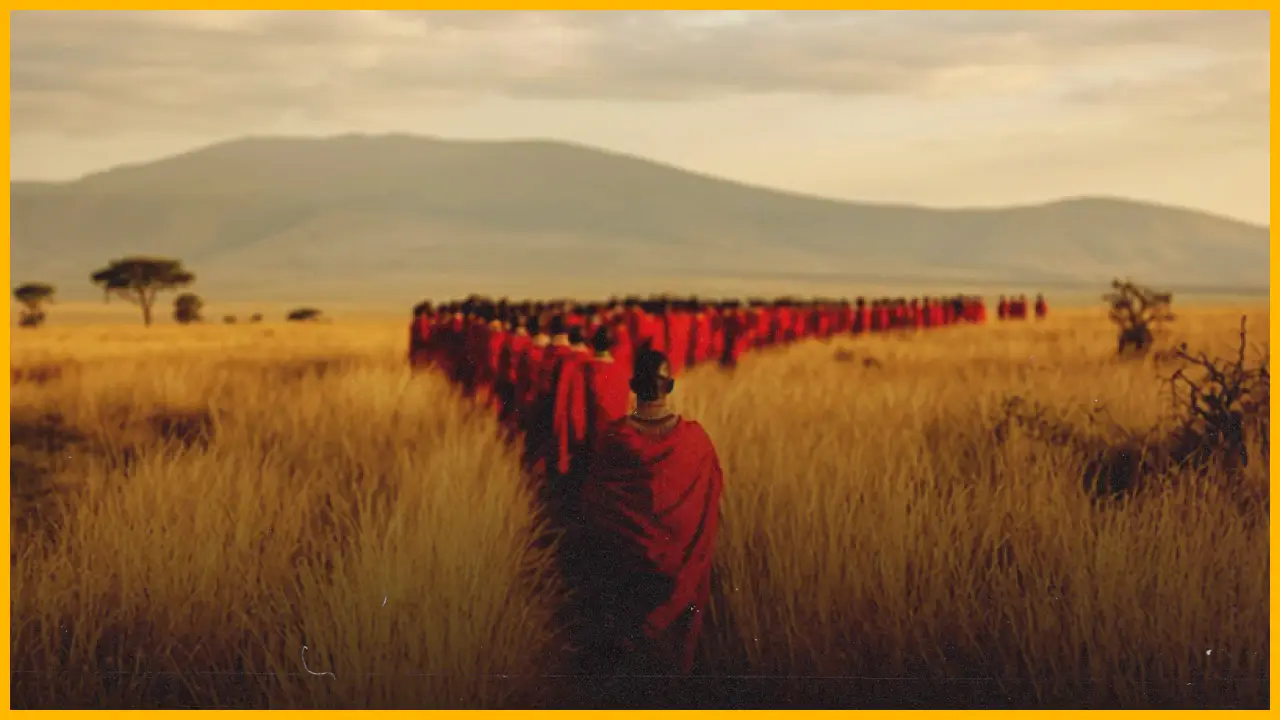
In 2009, a group of Maasai elders sat down in Kenya for a two-day workshop. They talked about something almost none of them had ever needed a word for: intellectual property. This would become central to the fight for African cultural ownership.
By then, the checkered red shuka that had become shorthand for “Maasai” worldwide was already showing up on Louis Vuitton runways, Ralph Lauren mood boards, and the badge of a Jaguar Land Rover marketing campaign.
Advocacy group Light Years IP would later estimate that more than 1,000 companies had used Maasai imagery or the Maasai name to sell products, from sneakers to swimsuits to exercise equipment, worth an estimated $10 million a year in unpaid brand value.
Nobody asked the Maasai first. Nobody, in most cases, asked them at all.
The Missing Element
The standard way to write about this is theft. The West helping itself to African aesthetics, again, the way it always has. That framing isn’t wrong, exactly. But it’s incomplete in a way that lets the real question slide by unanswered. The interesting part isn’t that “African” became a word global brands could put on a t-shirt to sell it faster. The part is that once it became that word, almost none of the money it generated found its way back to the people. The same people who made it mean something in the first place. The people best positioned to change this were never really the outsiders. They were the Africans with enough leverage, legal infrastructure, or global access to negotiate on equal footing.
The Maasai case is the clearest because the paper trail is unusually public. A community of roughly two million pastoralists across Kenya and Tanzania. A large share of whom live below the poverty line. They watched their name and imagery become, by one advocacy group’s estimate, a brand worth hundreds of millions of dollars in unpaid licensing value, used by more than a thousand companies without consent.
It took the founding of the Maasai Intellectual Property Initiative and years of organising across two countries with different laws, languages, and colonial legal legacies before that started to shift. The first real win came when apparel company Koy Clothing agreed to pay a 5 per cent royalty on its Maasai-inspired line. A modest number, but a precedent its organisers hoped would open the door to further deals.
That is the pattern worth sitting with. Not that a global brand used a pattern it didn’t invent; brands borrow constantly, from everywhere; that’s what fashion does. The pattern is that it took a formal trust, an international NGO, a decade of unpaid organising labour, and a level of legal sophistication most communities on the continent don’t have access to, just to get one company to agree to five cents on every dollar. The shuka remained valuable at every point in that story. What was missing, the entire time, was leverage.
A New Era of African Cultural Ownership
Compare that to what’s happened in African fashion’s export economy over the past several years, where a different group of Africans have been capturing value on their own terms, not by asking to be credited after the fact, but by owning the brand, the runway placement, and the retail relationship from the start. Thebe Magugu became the first African designer to win the LVMH Prize in 2019. Designers like Tolu Coker, Sevon Dejana, and Rich Mnisi have landed on red carpets and in Beyoncé’s Black Is King, while building direct-to-consumer businesses that don’t depend on a foreign label discovering them.</span>
Sana Ahmed, who founded The Fashion Law Africa Summit to help designers protect their work as they enter global markets, put the shift in one word: cultural ownership, ensuring designers are part of the conversation on their own terms rather than being exploited after the fact. That’s a different posture than protest. It’s designers and their advisors treating IP, trademark, and licensing as infrastructure to build before the global attention arrives, not paperwork to chase after the fact once a brand has already profited.</span>
The gap between these two stories isn’t talent or demand; both the Maasai and the designers had something the market wanted badly enough to pay for. The gap is who got to the negotiating table first, with a lawyer, a trademark, or a direct sales channel already in place.</span>
The Speed of Global Markets
What’s changed isn’t the underlying dynamic; culture has always moved faster than compensation for the people who make it. What’s changed is the speed. A pattern, a sound, a phrase can go from a specific neighbourhood to a global product line in the time it takes a trend cycle to complete, which is now measured in weeks, not decades. Legal and licensing frameworks, the kind the Maasai spent a decade building, move nowhere near that fast. Every year, the gap between “local practice” and “global product” narrows, more culture gets swept into that unprotected space before anyone with the leverage to negotiate even notices it left home.</span>
So when “African” becomes a brand word, on a runway, a record, a bottle of shea butter, the useful question is never whether it should be for sale. Culture travels. It always has, and pretending otherwise doesn’t help anyone. The useful question is who’s sitting at the table when the price gets set, and why that seat is still so hard for most of the people who made the thing in the first place to reach.</span>
Somewhere right now, a small brand is workshopping a “tribal” print line and hasn’t called anyone. Somewhere else, a designer’s lawyer is finalising a licensing clause before the collection has even shipped. Both of those rooms exist at the same time, doing business with the same continent’s culture. Only one of them has learned, the hard way, to ask first.
Discover more from Vibextaz
Subscribe to get the latest posts sent to your email.